
How to Wire a Log Home
How the electricity is installed?
The answer is, it’s easier than one might think!!!
On your plan mark out where you want outlets, cable boxes, and phone jacks.
You should work closely with an electrician to make sure what you want done is done to code.
Once you are certain of where you need the boxes placed the builder will follow your plan.
The builder will drill a hole in the center of the A and B rows (first 2 rows) of logs as they are installed. (Regarding the size of the hole: check with your local codes as it varies).
Then on row C (the third row) the builder will cut in the box and place a small chase wire.
The electrician can later tie onto the chase wire to pull the live wire up through. This keeps the wire concealed within the log.

The builder will drill large holes that line up vertically through several rows of logs in order to pull the wiring up through.
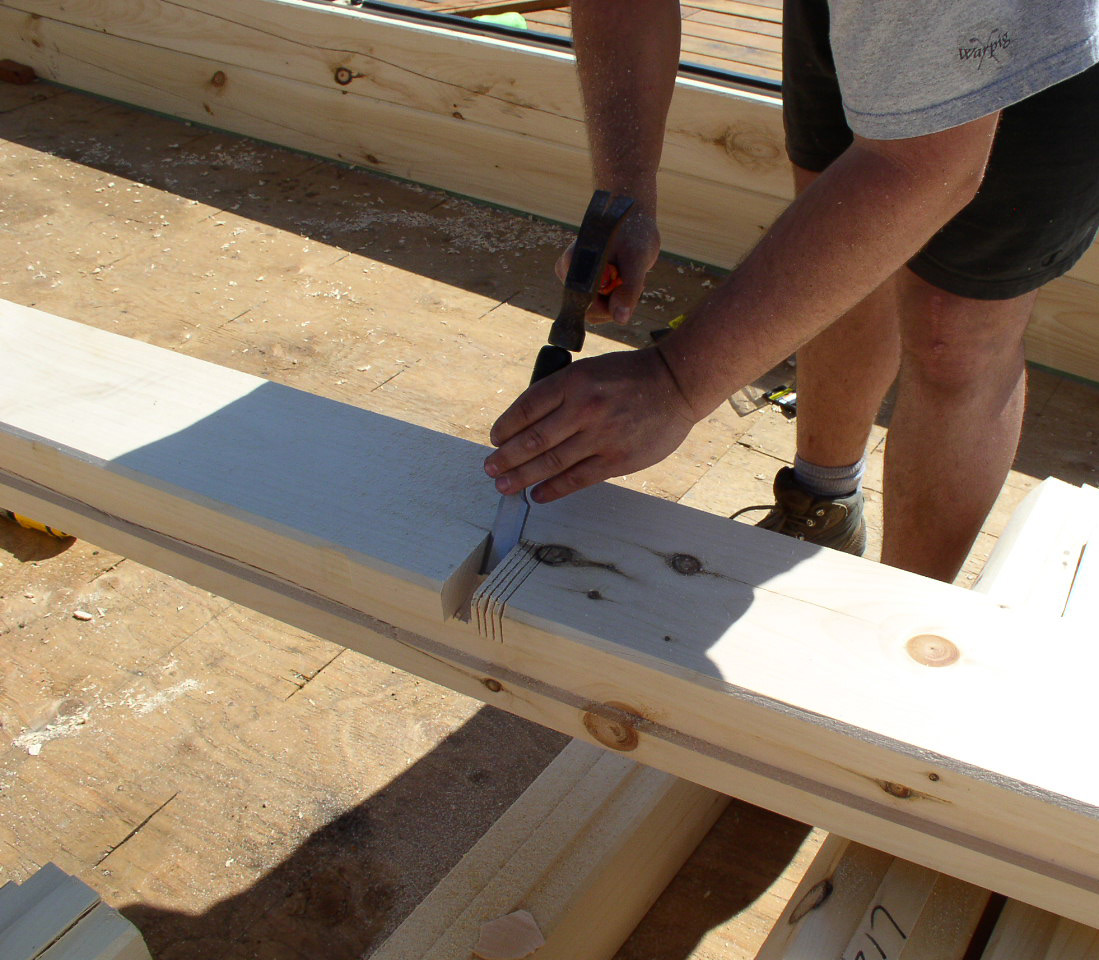
Several closely spaced saw cuts are made to allow a chisel to create a notch to accommodate an electrical outlet.
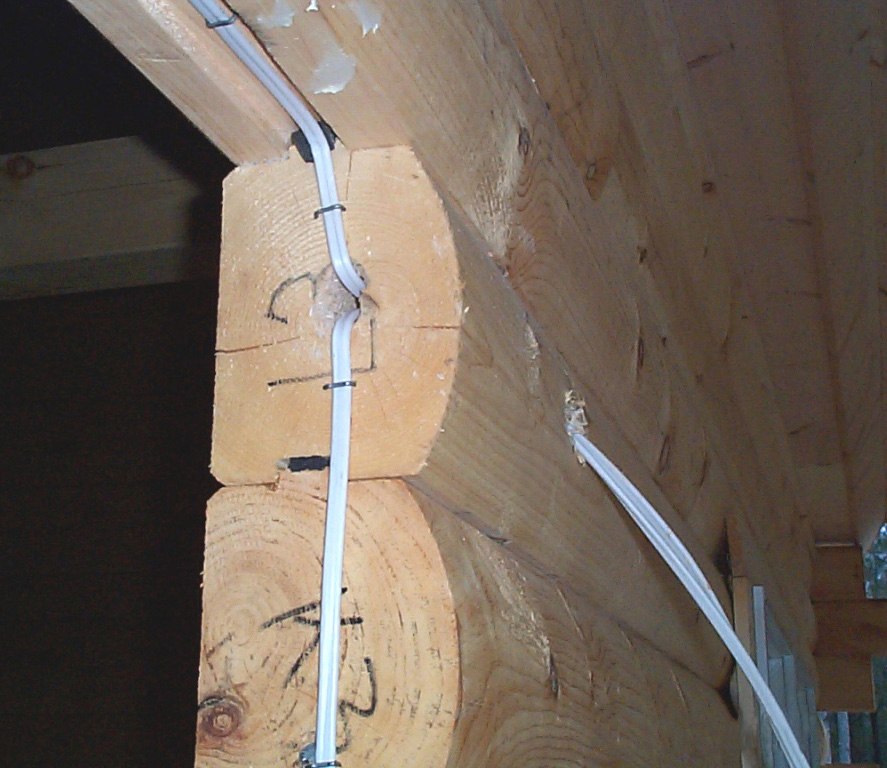
A wall-mounted fixture is prepared by drilling a large horizontal hole and a perpendicular hole to meet it in order to thread the wiring through.
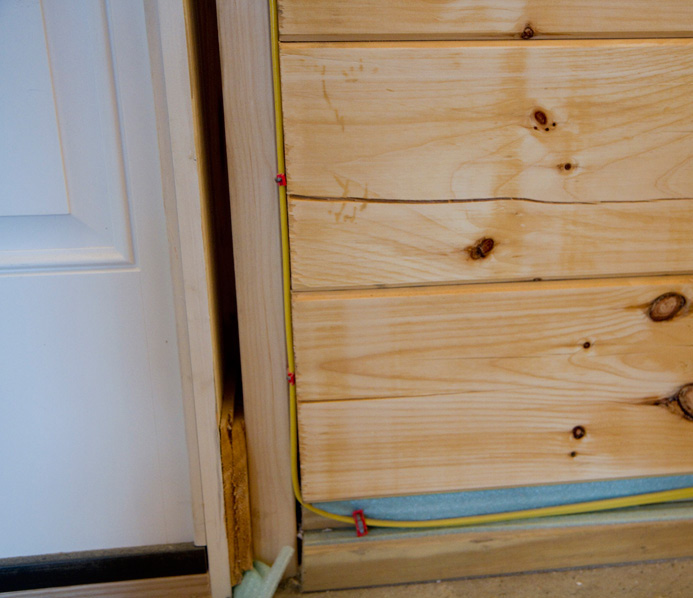
When building on a slab the log rows are started on a 2x4 sitting atop a sill board. The groove created hides the wiring very nicely.
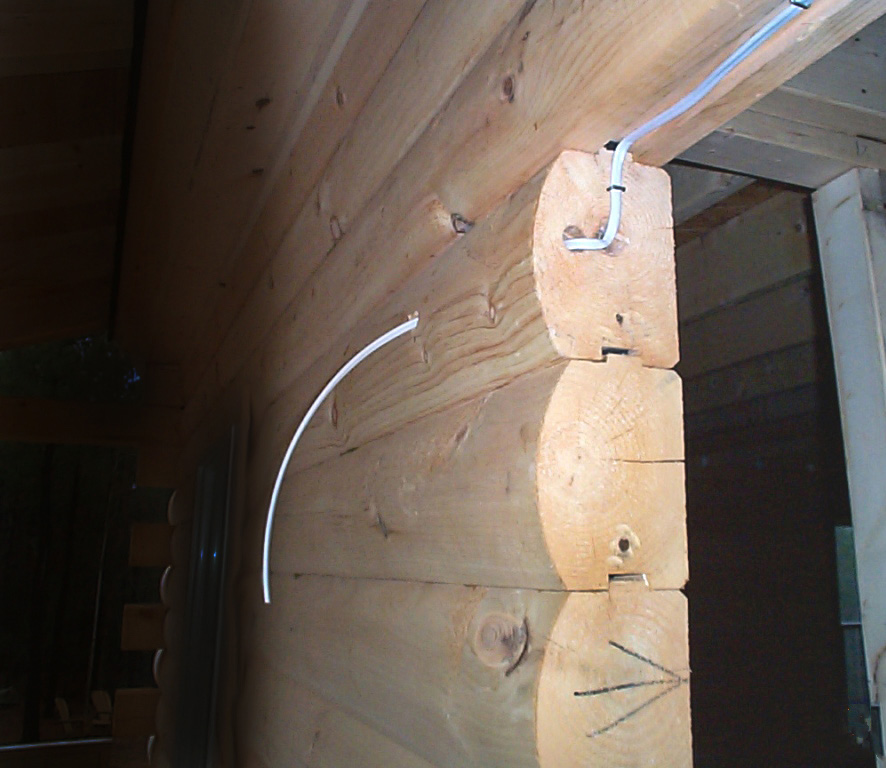
Secure the cable along the center of the door opening and avoid puncturing the wiring with nails when installing the door casing.
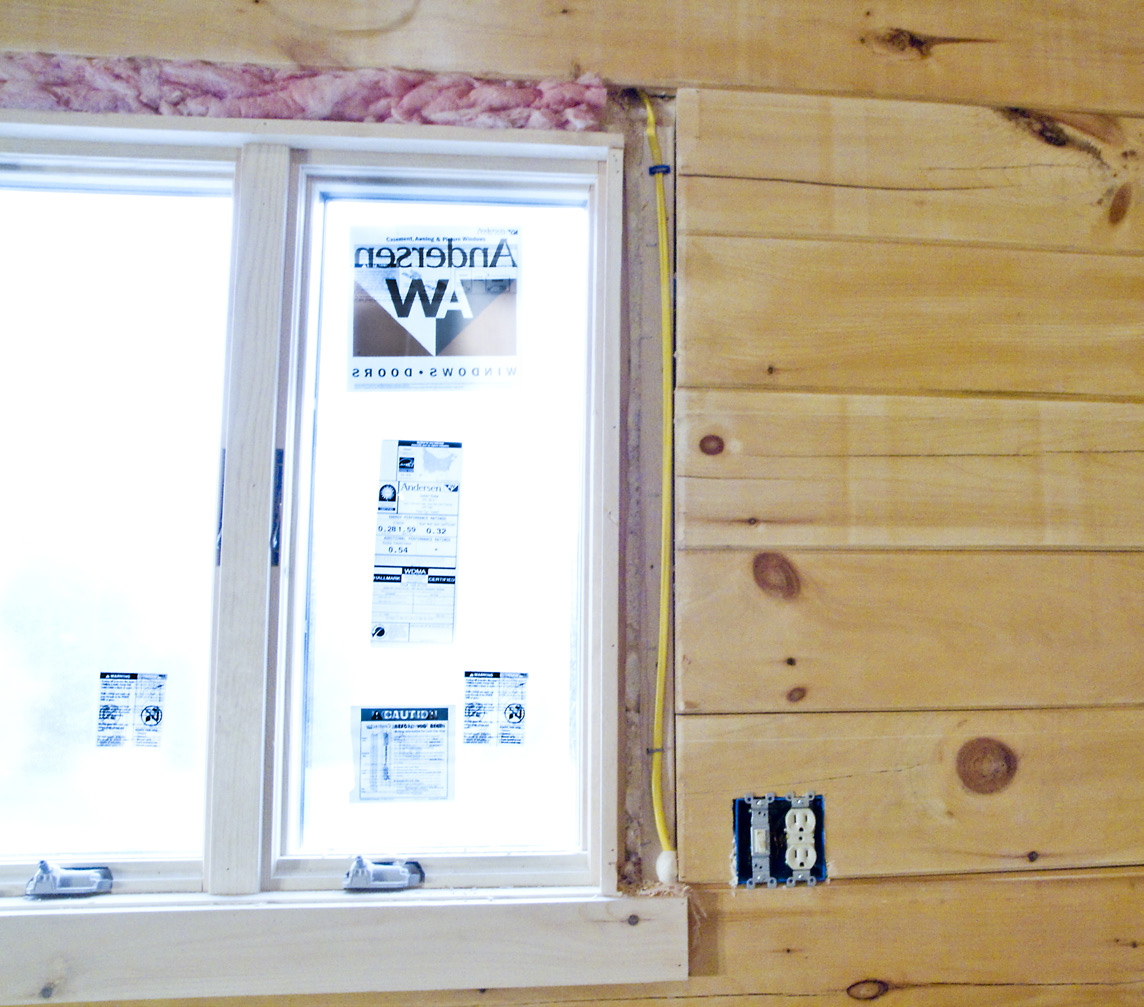
In this example the builder took advantage of the window opening in order to carry the wiring into other regions of the home.
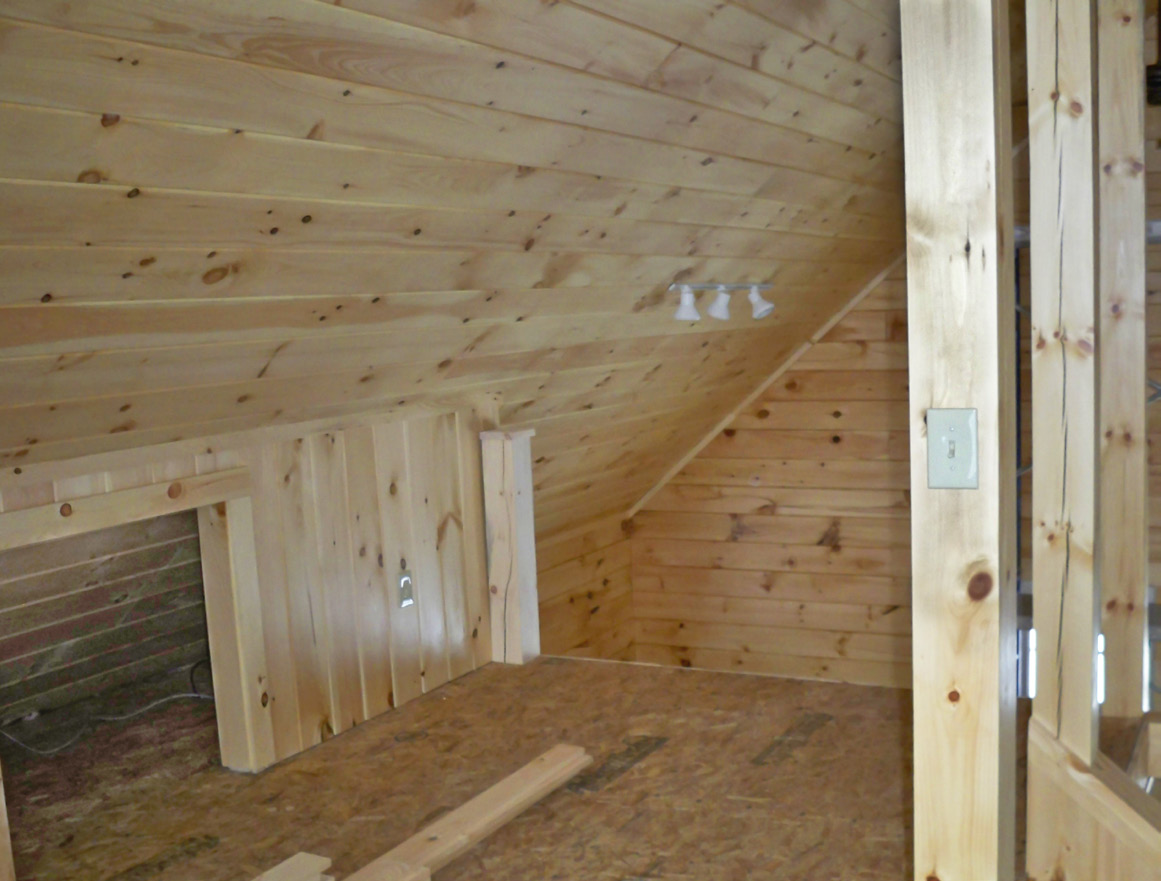
Drilling and notching methods mentioned previously were implemented for the light switch installed on this 6x6 post.
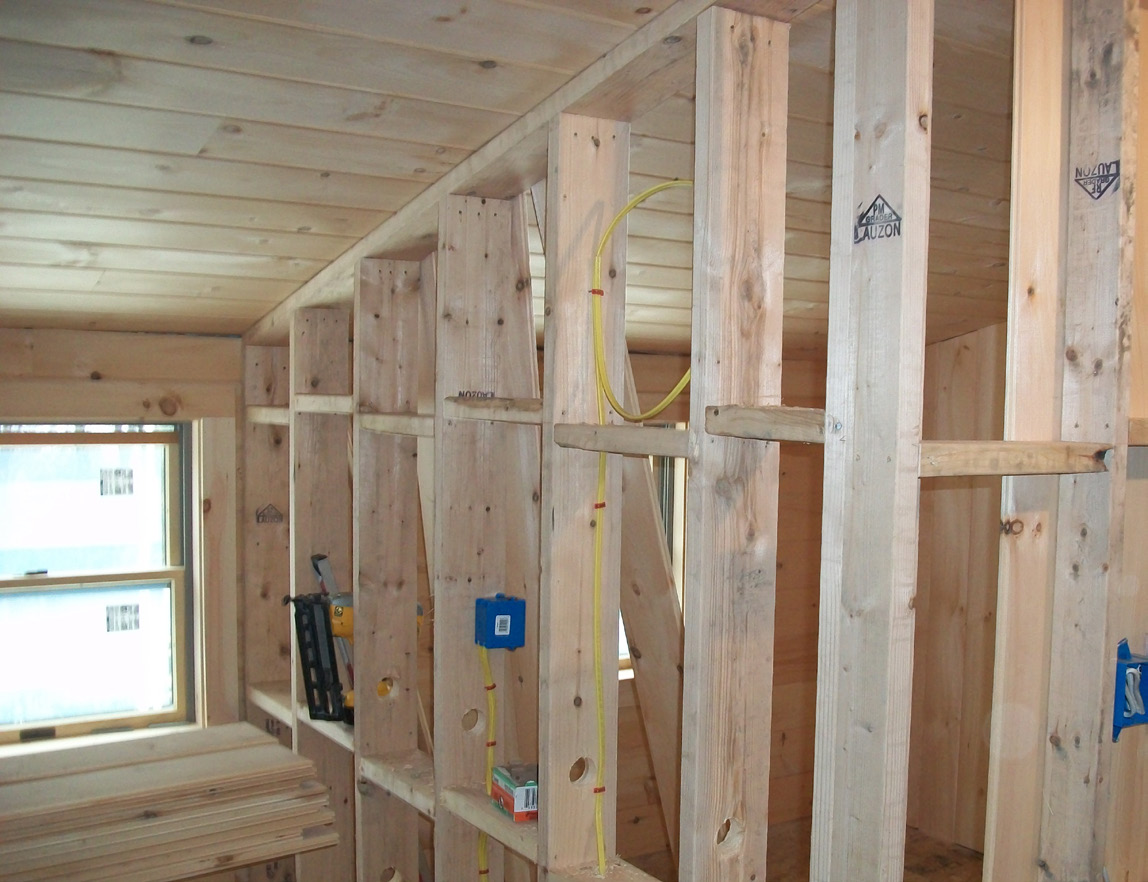
It’s an easy thing to hide wiring for switches and outlets in the interior partition walls. Note the drilled holes and secured wiring along the studs.

Note the attractive look of this set-in mounting board.
It is vertically level and flush with the curve of the exterior wall as is the door casing.


These two examples illustrate an alternative method of installing wiring behind kitchen cupboards. Because of the permanent damage to the wood in this method we suggest you have complete confidence in the placement of the cupboards both now and in the future.
Electrical Installation in a Log Home
Question: How Is Electrical Installed in a Log Home?
Answer:
When it comes to building a log home versus a traditional stick-frame house, there are plenty of construction differences. One that causes the most head-scratching among those new to the log home world is how a house built with logs is wired. In fact, it’s one of the questions they’ve fielded the most at Coventry Log Homes, says Vice President Mark Elliott.
In a conventionally built home, electrical wiring is run through the studs in the framing, but what do you do when your walls are solid logs? The method isn’t quite as tricky as you might expect. “With the Coventry building system, the process involves stacking the first two rows of logs then drilling a hole into the logs to run the wires through before adding the third row,” explains Mark. (He warns to look out for companies that cut corners by skipping this essential step by putting outlets directly in the floor.)
For switches or outlets near a doorway, wires are chased inside the door jamb, while outlets or light fixture boxes simply require the logs to be notched where those elements will be placed. “It’s really very straightforward. Beyond that little bit of effort, it’s no different than doing electrical in any other type of home,” Mark says. “You use the same wires, boxes, outlets and covers.”
The key to a smooth installation process is to have a plan. “All of the details can feel overwhelming, but a little planning goes a long way,” he says. When marking up your plans with your electrician, Mark recommends taking a mental walk-through of your house, room by room: “Think about everything that is going to go into that room.”
For most outlets and switches, your electrician will follow standard national or local codes, but there are some specific things to consider when creating a personalized electrical plan:
- The type and placement of your light fixtures. If you’re going to hang a trio of pendants above your kitchen island, the wiring will be different than if you choose a single fixture or recessed lighting. The same goes for ceiling fans, which require special boxes. Additionally, you’ll need to alert your electrician if you plan to include accent lighting above kitchen cabinets or to highlight beams in a cathedral ceiling.
- The weight of any special light fixtures or accent lighting. If you’ve got your heart set on an antler chandelier in your great room, be sure to notify your electrician, as he will need to plan for the added weight.
- The type of finish on interior walls. Your electrician will want to know if you plan to use tongue and groove pine, drywall or some other finish on your interior walls. Here’s why: Outlet boxes need to be flush with your wall and the thickness of the wall covering will determine the placement of the boxes. (For example, tongue and groove is generally about three-fourths of an inch thick, while drywall is only about one-half inch.)
- Any special electrical features, inside and out. If you hope to install a hard-wired security system, multiple wireless internet hot spots, a landline phone (for remotely located homes), a media center with a mounted television or special lighting around the holidays, you will need to make allowances for these features.
In addition, Mark offers this tip for creating a successful, long-term electrical plan: “Think of your house in terms of how you use it now and also how you may use it in the future. Go ahead and put in plenty of outlets to give yourself the ability to change up the configuration of a room later on. What may be the nursery now might be an office someday. Changes can be made down the road, but it’s much easier to do it all during construction than after the fact.”